Back
10 key Takeaways from Shoptalk Spring 2026 (For those who weren’t in the room)
Laura B
Marketing Analyst

If you weren’t at Shoptalk Spring 2026 in Vegas, you missed the moment retail officially entered its "Age of AI". The energy was electric, the stakes were high, and the message was clear: simply "having AI" isn't enough anymore—you have to weaponize it to survive.
We went far beyond the exhibition booths, embedding ourselves in high-level keynotes and sparking direct dialogues with retail’s top architects to map out how the industry is evolving past simple sales.
Buckle up— Now we will explore the biggest takeaways and macro trends from our notes:
1. The 3.7% Growth Headline is a Lie
On paper, U.S. retail grew by $316B last year—a solid 3.7%. But don't let that fool you! If you strip away the "Big Three"—Amazon, Walmart, and Costco—the rest of the market grew a pathetic 2.7%. In an inflationary environment, that’s just standing still.
The gap is widening because the giants treat tech like a weapon, while the mid-market is still treating it as an expense. It's time to change that mindset!

Colorful shopping bags for retail sales. Photo via Pexels.
2. Stop Burning Your Marketing Budget
Customer Acquisition Costs (CAC) have exploded by 222% over the last decade. You are paying triple the price just to drag a shopper to your door.
If you spend that much to win a customer only to show them an "Out of Stock" message, you are literally incinerating your margin. Inventory health isn't just a boring metric; it’s the heartbeat of your survival. Every stockout is a failed deployment of your capital.
3. The GLP-1 Biological Shock
This is a total structural shift, not a health trend. With oral GLP-1 meds like Wagobi hitting Amazon for just $25/month, we’ve hit the tipping point. Adoption is projected to hit 20% of the U.S. population, and it’s going to force a total simulation of your merchandising.
Grocery: Users eat 80% less and demand high protein and micro-portions.
Apparel: Get ready for a massive wardrobe refresh cycle as consumers drop 2-3 sizes in months.
The Danger: If you’re using 12-month-old data, you’re stocking for a consumer that literally doesn't exist anymore.
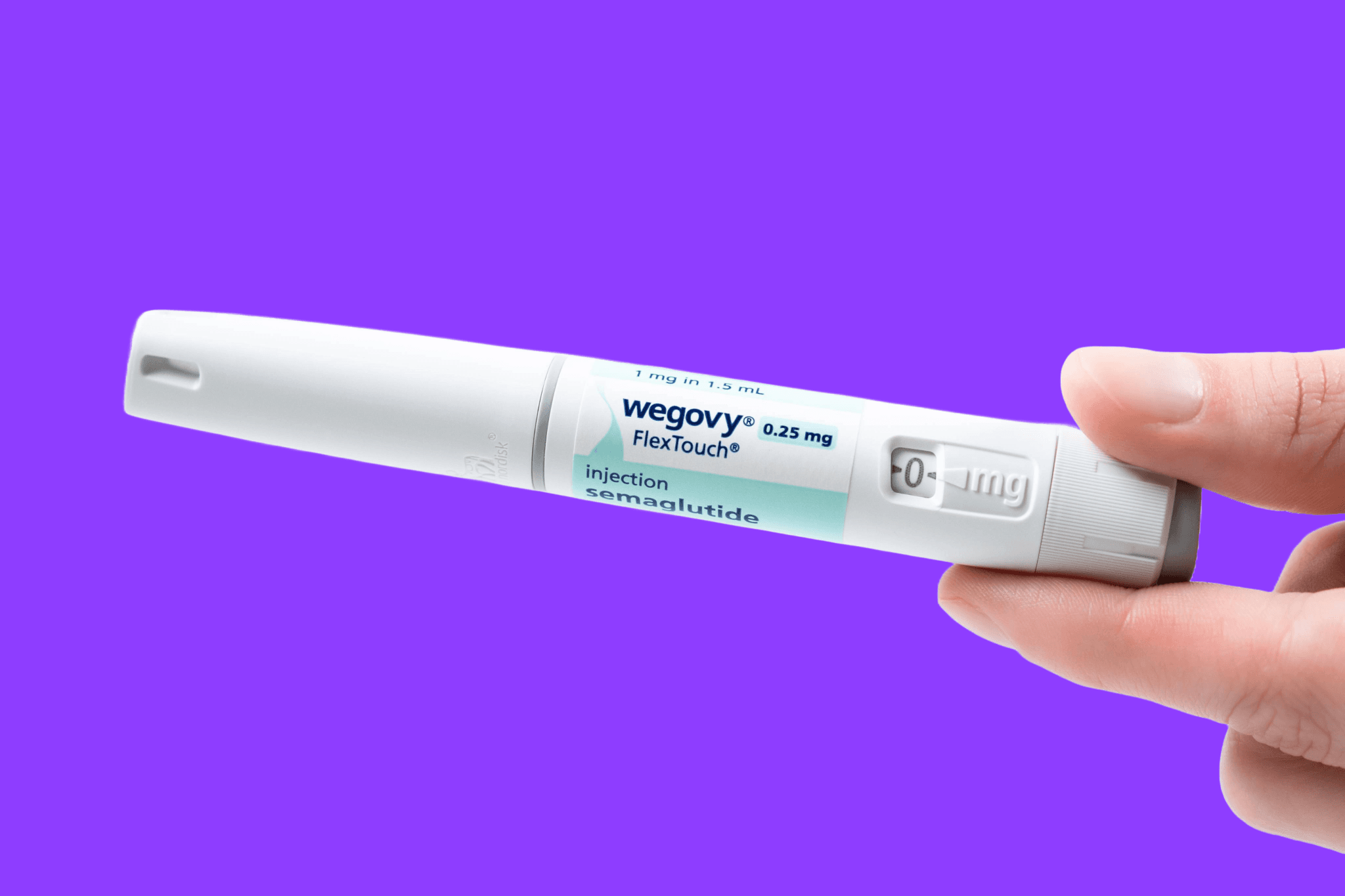
Close-up of the Wegovy® FlexTouch® pen used for weekly weight loss treatment.
4. Sensing > Planning (The Tightly Difference)
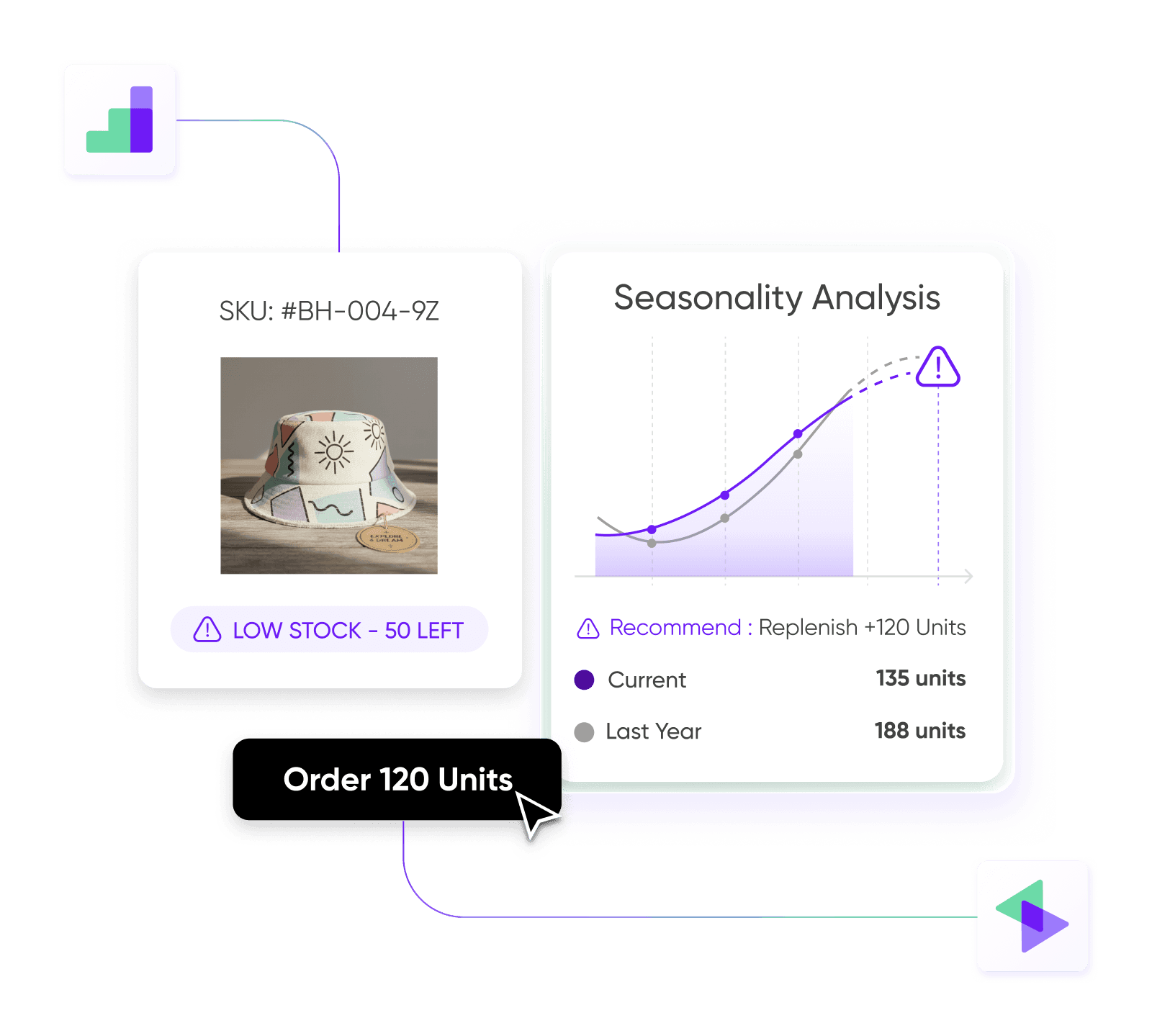
Traditional "Demand Planning" relies on the past to predict the future—but in a "black swan" economy, the past is a liar. We are moving to Demand Sensing, which uses real-time signals like social spikes and weather patterns to automate replenishment in hours, not months.
→ The Tightly Edge: While legacy ERPs look at what happened last month, Tightly senses what is happening right now. Our Demand Sensing connects your GA4 intent data directly to your inventory so you can see what customers want before they even buy it. Instead of guessing based on the past, we help you spot viral "Add to Cart" surges in real-time. This lets you restock faster and shift your ad budget to products that are actually in stock.
5. Agentic Commerce: The Death of the Search Bar
The search bar is dead and the traditional "storefront" is eroding. We are entering the era of Agentic Commerce, where AI agents—not humans—do the browsing. These bots don't care about your "vibrant" website design; they care about your APIs and your Real-Time Availability. If your inventory data isn't machine-readable and ready for an agent to execute a transaction in milliseconds, you are invisible to the modern web.
6. Scaling Emotional Connection (The Nostalgia Engine)
The secondhand market is growing at 13%—crushing the 2% growth of the broader fashion market. Smart brands are finally decoupling from third-party platforms to build owned resale ecosystems. Why? To capture the Customer Lifetime Value (LTV) and the data. If 90% of your resale is on a peer-to-peer app, you are blind to your most valuable customers.

Vintage-style denim jacket with embroidery on a pink background. Photo via Pexels.
7. The Costco Model: ID is the Price of Entry
Anonymous shopping is over. Retailers are now requiring identification at the door. This is to fundamentally separate security from the shopping experience. It's not just about cutting inventory loss from 1.5% to 0.2%; it's also about making the warehouse more human. When you identify at the door, you get rid of the "anti-theft friction" of locked glass cases that make honest shoppers look like criminals.
8. Micro-Automation Economics Have Flipped
The days of reserving automation for massive, remote mega-warehouses are officially over. Previously, robotics only made financial sense if you were churning out 3,000 orders a day, leaving mid-sized retailers stuck with slow, expensive manual picking. But the math has radically flipped thanks to Micro-Fulfillment Centers (MFCs):
The New Way: If a local store hits 500 orders a day, the robots pay for themselves.
For supply chain leaders, the takeaway is stark: automation is no longer a luxury reserved for the 1% but a baseline utility for anyone with a physical footprint.
9. Infrastructure as Strategy
Legacy setups are like a car in a locked garage—data at rest, waiting on someone to check a dead spreadsheet. This is why you need to treat inventory as a fluid vector and execute against the signal, not the schedule. You need the digital pipes so well-connected that the moment a signal flashes, the system responds in milliseconds.
10. The Death of the "Just-in-Time" Illusion
Retail isn't just "changing"—it is being re-engineered. The industry has moved away from the Just-in-time model because it’s too brittle for a world of constant disruption. Since you can't predict the next disordering, you have to automate your response to it. Today, the winners use their supply chain as a dynamic nervous system, sensing demand signals in real-time and executing stock movements before the consumer even knows they want the item.
→ The Tightly Edge: Tightly directly addresses the shift by abandoning static inventory targets and using an automated 90-day forward simulation engine to trigger replenishment recommendations autonomously. To adapt to market chaos, the platform runs continuous "tournaments" via a 13-week competitive backtest that automatically tests and selects the most accurate forecasting model—such as AutoARIMA, Profet, or Croston—for each specific product.
The Bottom Line: Adapt!
If there’s one unifying thread connecting all these takeaways from Shoptalk Spring 2026, it’s this: the era of static retail is dead. You can no longer rely on last year's data to predict tomorrow's consumer, nor can you fight the widening gap between the retail giants and the mid-market with spreadsheets and monthly planning meetings.
The technology we once viewed as "futuristic"—whether it's AI demand sensing, autonomous micro-fulfillment, or agentic commerce—is now the baseline required just to stay on the playing field. We were also reminded that algorithms might help people find your brand, but emotion is what actually gets them to buy. With everyone being so price-sensitive right now, just relying on a legacy brand name isn't enough. The biggest players are realizing they have to earn that loyalty back by creating genuine connections—whether that means leaning into nostalgia, rewarding customers for engaging with the community (not just spending money), or getting back to real, one-on-one customer service.
The retail giants are already weaponizing these tools to capture the market's true growth. For everyone else, survival depends on fundamentally rewiring your infrastructure from a chain of silos into a dynamic, responsive nervous system.
Laura B
Marketing Analyst
Share