Back
Microsoft Dynamics 365 + Tightly: How an ERP and an AI Inventory Layer Work Better Together
Laura B
Marketing Analyst

What Is Microsoft Dynamics 365 Inventory Management?
Dynamics 365 Inventory Management — part of Dynamics 365 Supply Chain Management and Business Central — is a centralized ERP platform to track, forecast, and control inventory across multi-entity environments, unifying procurement, warehouse ops, production planning, finance, and sales in real time.
Where Dynamics 365 Falls Short on Forecasting
As ecommerce and modern retail brands scale, supply chains become exponentially more complex. Multiple warehouses, omnichannel sales, fragmented SKU catalogs, and viral product cycles strain systems that were designed to record what already happened rather than predict what is about to happen.
Native Material Requirements Planning (MRP) handles foundational replenishment, but it leans on historical sales, static safety stock minimums, and fixed vendor lead times to trigger POs. For agile consumer brands with fragmented sizes, colors, and seasonal trends, that approach is too rigid and too reactive.
"Dynamics 365 is the definitive 'what is' of your supply chain — current stock, bin locations, and financial valuation with pinpoint accuracy. Scaling brands also need to know 'what's next.'"
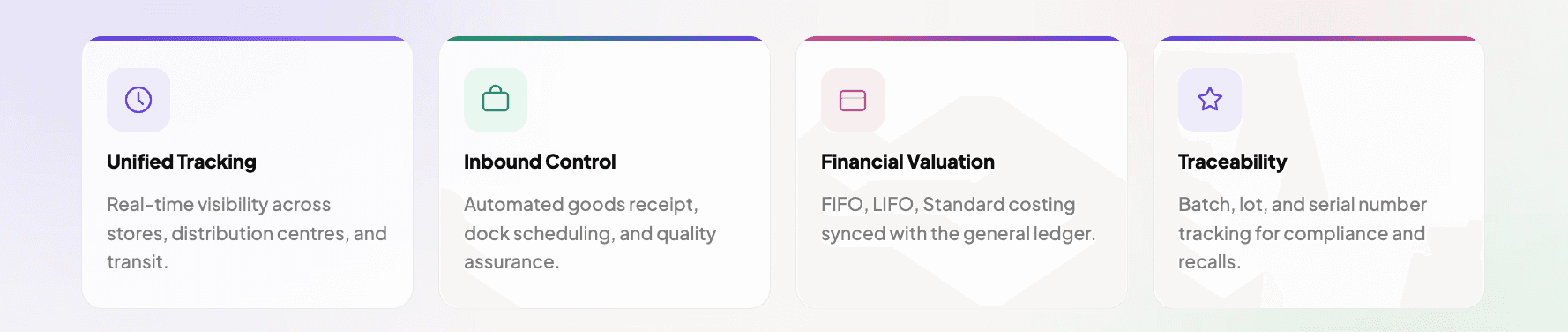
The Perfect Synergy: How Each Platform Makes the Other Better
How Dynamics 365 Empowers Tightly (the foundation)
Tightly's algorithms are only as good as the data they consume. Dynamics 365 is the unshakeable source of truth.
Flawless data inputs — Real-time, bin-level multi-warehouse stock feeds Tightly's 90-day forward simulations, so forecasts run on reality, not guesswork.
Logistical muscle — Tightly tells you what to do; Dynamics 365 actually does it — picking, packing, license plates, lot/serial traceability.seria
Financial rigor — Dynamics 365 ties every inventory transaction directly to the general ledger using FIFO, LIFO, Weighted Average, or Standard Costing. That precise cost basis is what allows Tightly to calculate true profit margins per SKU — not blended estimates — and then sort your catalog into Winners, Sleepers, and Bleeders with real numbers behind every classification.
How Tightly Elevates Dynamics 365 (the intelligence)
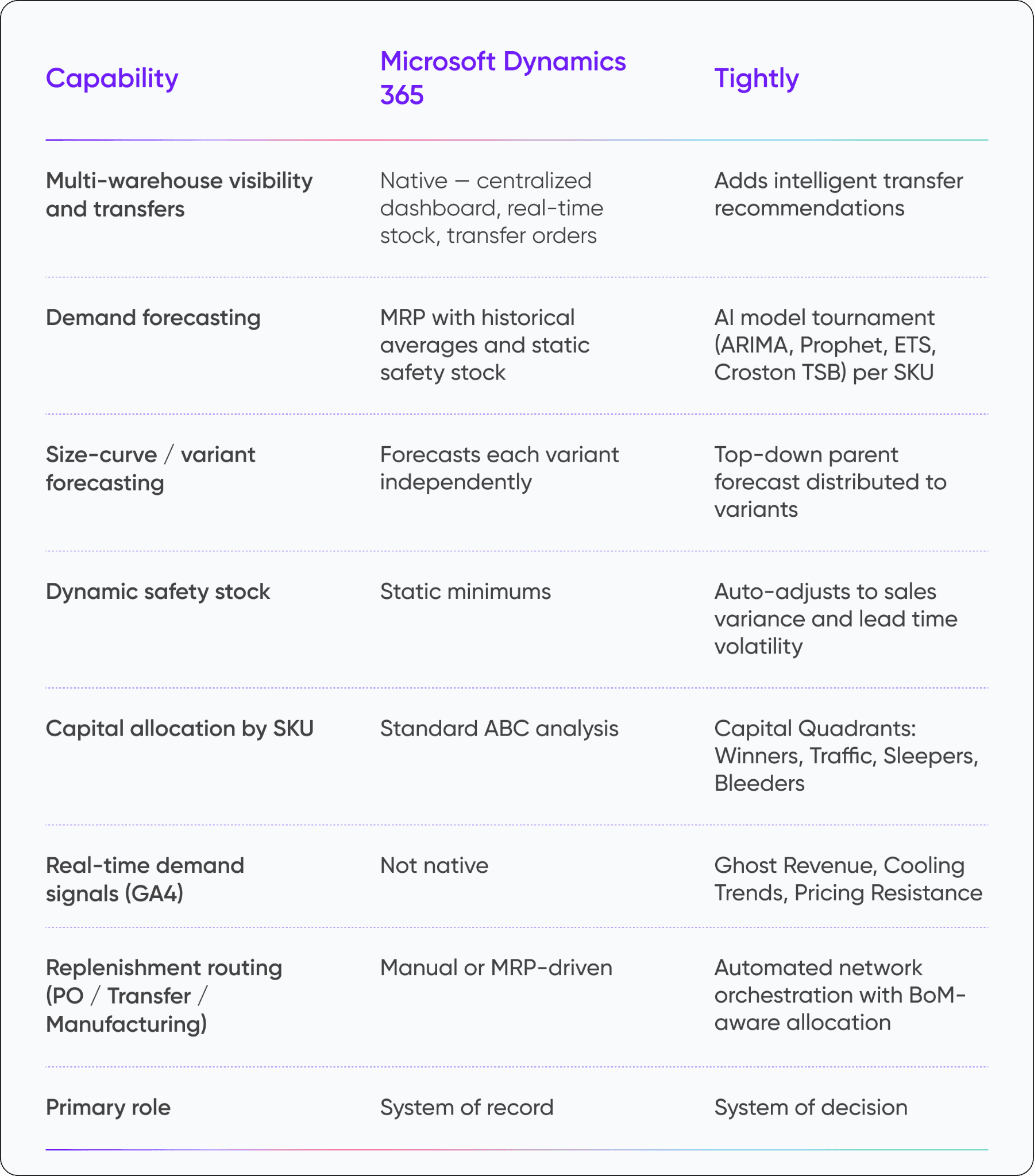
Dynamics 365 is great at tracking what is on the warehouse floor. But it relies heavily on historical averages and rigid reorder rules to plan ahead — which is too slow for modern DTC demand. Tightly bolts on the intelligence layer that tells you what's next.
From static to algorithmic forecasting — Replaces rigid historical averages with Model Tournaments that auto-assign the most accurate prediction per SKU.
Real-time demand signals — By the time a stockout shows up in a Dynamics 365 sales report, you've already missed the revenue. Tightly connects directly to Google Analytics 4 and surfaces leading indicators before they hit your P&L: Ghost Revenue flags out-of-stock SKUs that customers are still actively trying to buy (so you can expedite a restock), and Cooling Trends flags former bestsellers losing web traffic (so you can cancel inbound POs in Dynamics 365 before that inventory turns into dead stock).
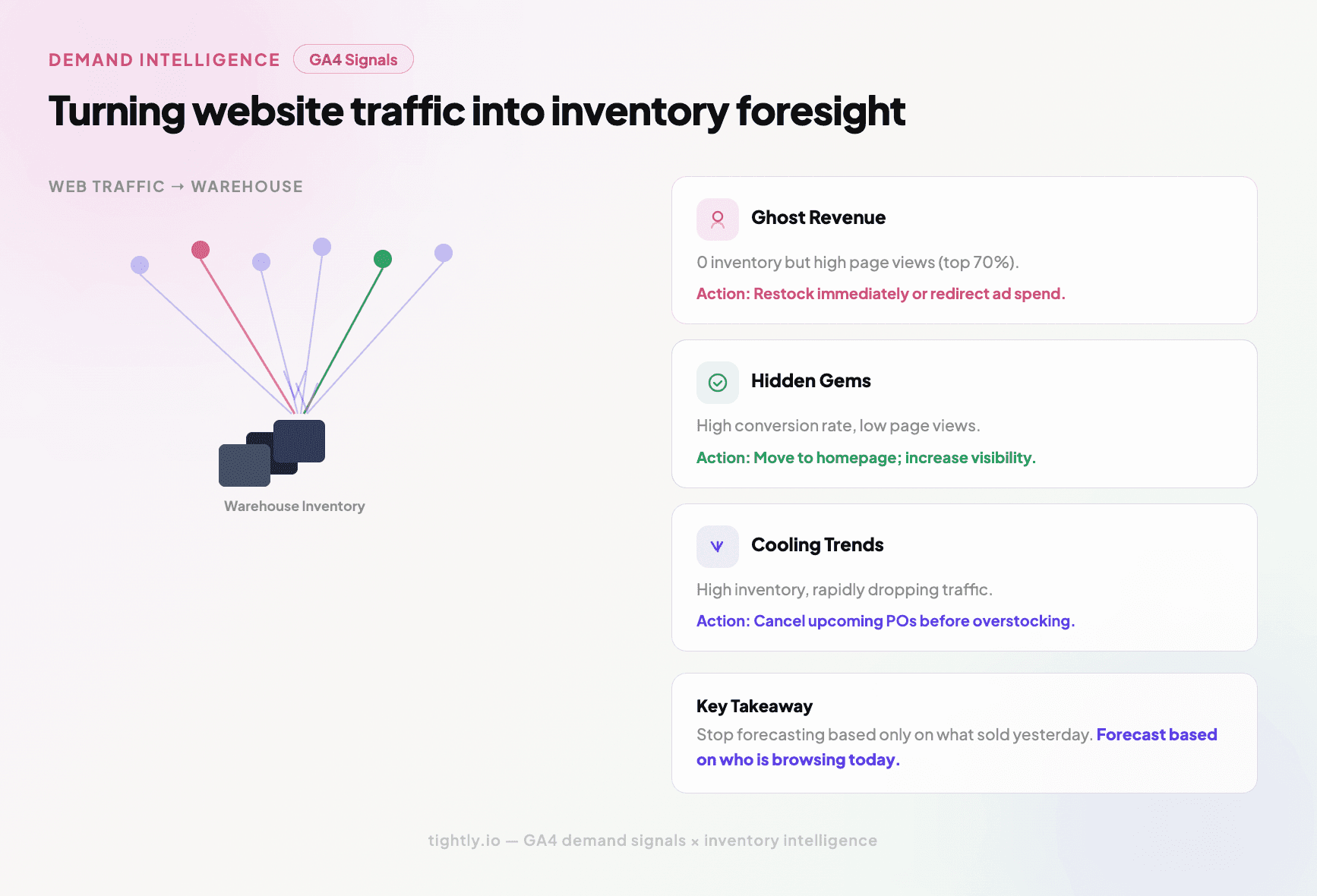
Automated financial strategy — Dynamics 365 holds an enormous amount of cost and margin data, but pulling it into an actionable strategic view usually means custom reports, BI dashboards, and a lot of analyst time. Tightly does it automatically: in one screen, executives can see exactly where their ERP-tracked capital is actively driving growth, where it's quietly hiding (Sleepers worth protecting), and where it's trapped in slow-moving dead stock that needs to be liquidated.
Dynamics 365 vs Tightly at a Glance
Inside the Model Tournament
Where Dynamics 365 uses one-size-fits-all moving averages, Tightly runs a competitive tournament per SKU. Think of it like auditions. Every SKU gets its own forecaster — but instead of picking one and hoping for the best, Tightly makes them compete and assigns the winner.
Pattern detection first — Tightly checks how the SKU actually behaves. Does it sell every week or only occasionally? Does it spike at the same time each year? That pattern decides which models qualify to compete.
Competitive backtestin— The last 13 weeks of real sales are held back. Models only see older data and have to predict the hidden weeks.
Advanced model selection— Four models compete: ARIMA (steady trends), Prophet (strong seasonality), ETS (gradual shifts), and Croston/TSB (slow movers).
Strict error scoring — The model whose predictions came closest to actual sales wins (lowest WMAPE; MAE breaks ties).
Continuous auto-correction — Tightly re-runs the tournament in the background and silently swaps in a new winner if demand patterns change. No manual retraining.
→ Two Forecasting Paths: Evergreen vs Seasonal
Picking the best model is only half the job. Tightly also chooses how to forecast — directly at the variant level for stable evergreen products, or top-down for seasonal ones (forecast the parent product, then distribute demand across sizes using historical size-curve ratios). That's what stops you from blowing through Mediums while Smalls and XLs sit on the shelf. Here's how the two paths split:
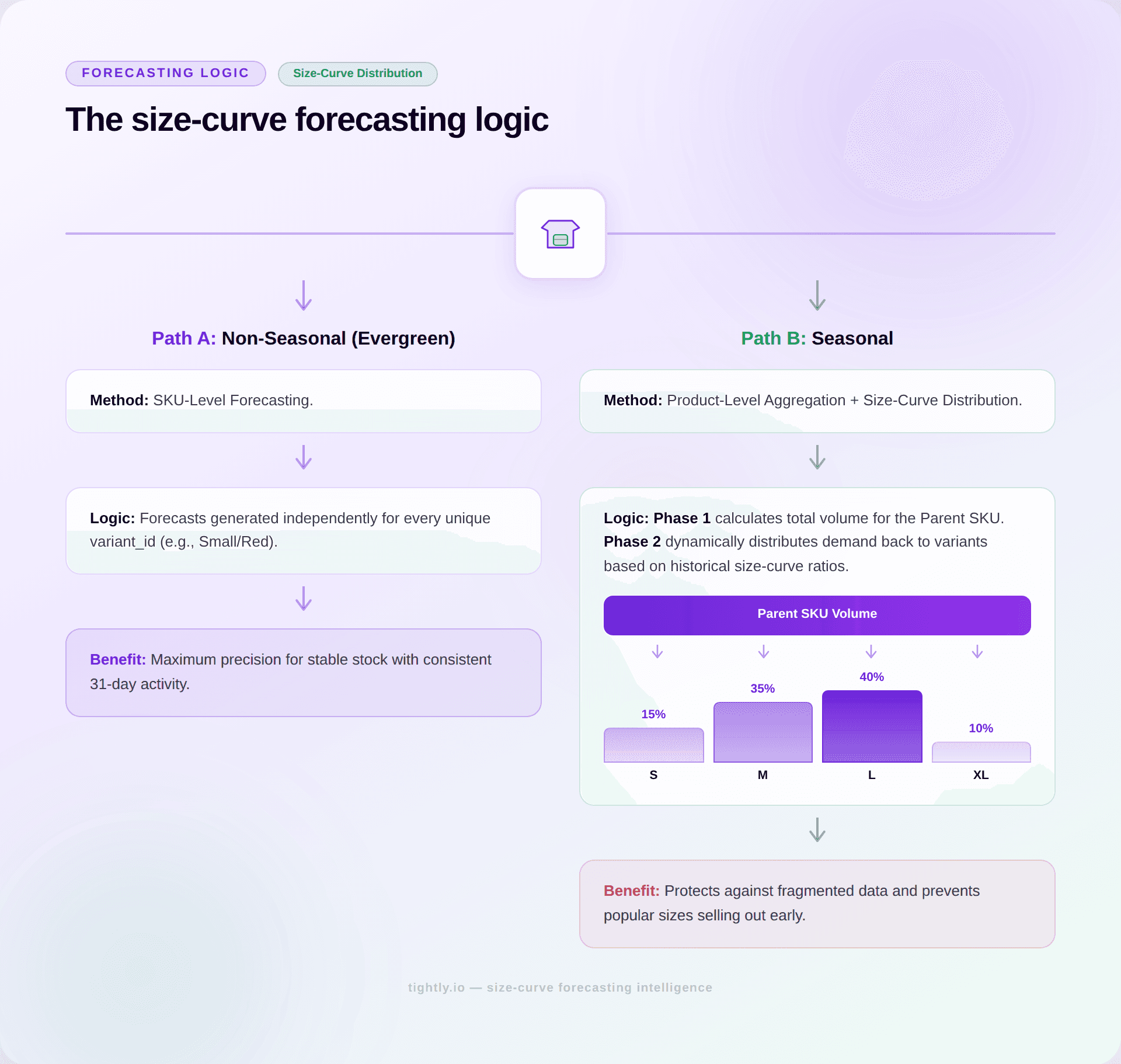
How Tightly's size-curve logic decides which forecasting path to take — direct SKU-level forecasting for evergreen items, or parent-product aggregation with size-curve distribution for seasonal apparel.
Why Scaling Brands Must Have Both
You cannot run a global, compliant supply chain without the heavy-lifting capabilities of an enterprise ERP like Dynamics 365. It is the ultimate source of truth for your corporate accounting, procurement execution, and physical warehouse infrastructure.
However, in the volatile world of e-commerce, waiting for manual spreadsheet analysis to catch up with a TikTok trend will cost you margins. By combining Dynamics 365's execution power with Tightly's predictive intelligence and automated capital allocation, brands can build a synchronised supply chain that eliminates stockouts, liquidates dead stock, and maximises every dollar invested.
FAQ
What is Microsoft Dynamics 365 Inventory Management? A centralized ERP module within Dynamics 365 Supply Chain Management and Business Central for tracking, forecasting, and controlling inventory across multi-entity, multi-warehouse operations.
Does Tightly replace Microsoft Dynamics 365? No — Tightly is an AI inventory intelligence layer on top of Dynamics 365. Dynamics 365 stays the system of record for WMS, traceability, and accounting.
Which brands benefit most? Scaling ecommerce, apparel, beauty, food and beverage, and consumer goods brands with high SKU counts, multiple variants, multi-warehouse networks, or hybrid manufacturing.
References
ERP Research. (2026). Microsoft Dynamics 365 inventory & stock management module overview [Web Page]. ERP Research. https://www.erpresearch.com
Friedberg, A. (2025). 7 tips for using Dynamics 365 for inventory management [Blog Post]. Internet eBusiness Solutions.
Gupta, A. (2025). Microsoft Dynamics 365 inventory management: A smarter way to manage your stock [Blog Post]. Damco Group. https://www.damcogroup.com
Havi Technology. (2025). Dynamics 365 inventory management: Key capabilities and a starter's guide for Au [Blog Post]. Dynamics 365 Community. https://community.dynamics.com
Kwixand Solutions Inc. (2024). 9 essential inventory features in Dynamics 365 Business Central [Blog Post]. ERP Software Blog. https://www.erpsoftwareblog.com
Lannet Technology. (2026). Dynamics 365 smart inventory management guide [Blog Post]. Lannet Technology. https://www.lannettechnology.com/smart-inventory-dynamics-365-business-central/
Microsoft. (2025). Inventory management overview - Supply Chain Management [Web Page]. Microsoft Learn. https://learn.microsoft.com
Rathi, J. (2025). How to manage your inventory using Microsoft Dynamics 365 Business Central [Blog Post]. Dynamics Square. https://www.dynamicssquare.co.uk
Laura B
Marketing Analyst
Share