Back
Talking to your data - The shift towards Conversational Analytics
Cagla S
Core Platform Product Lead
The first thing you notice is the heat from your laptop—a physical sign of your processor struggling with a 200MB "Master Inventory" Excel file. You are sitting in a 10:00 a.m. meeting under the pressure of an unanswerable question. As your cursor stutters through a dozen browser windows and multiple vendor tools, you experience "tab-switching fatigue". With shipping windows closing in mere hours, you are paralyzed by a lack of certainty.
This is the "visibility challenge" in its most tactile form. When information is split across three different places with no single source of truth, the Monday morning report becomes an invisible anchor that drags down the credibility of the entire leadership team.
The Invisible Anchor → Fractured Knowledge Architectures
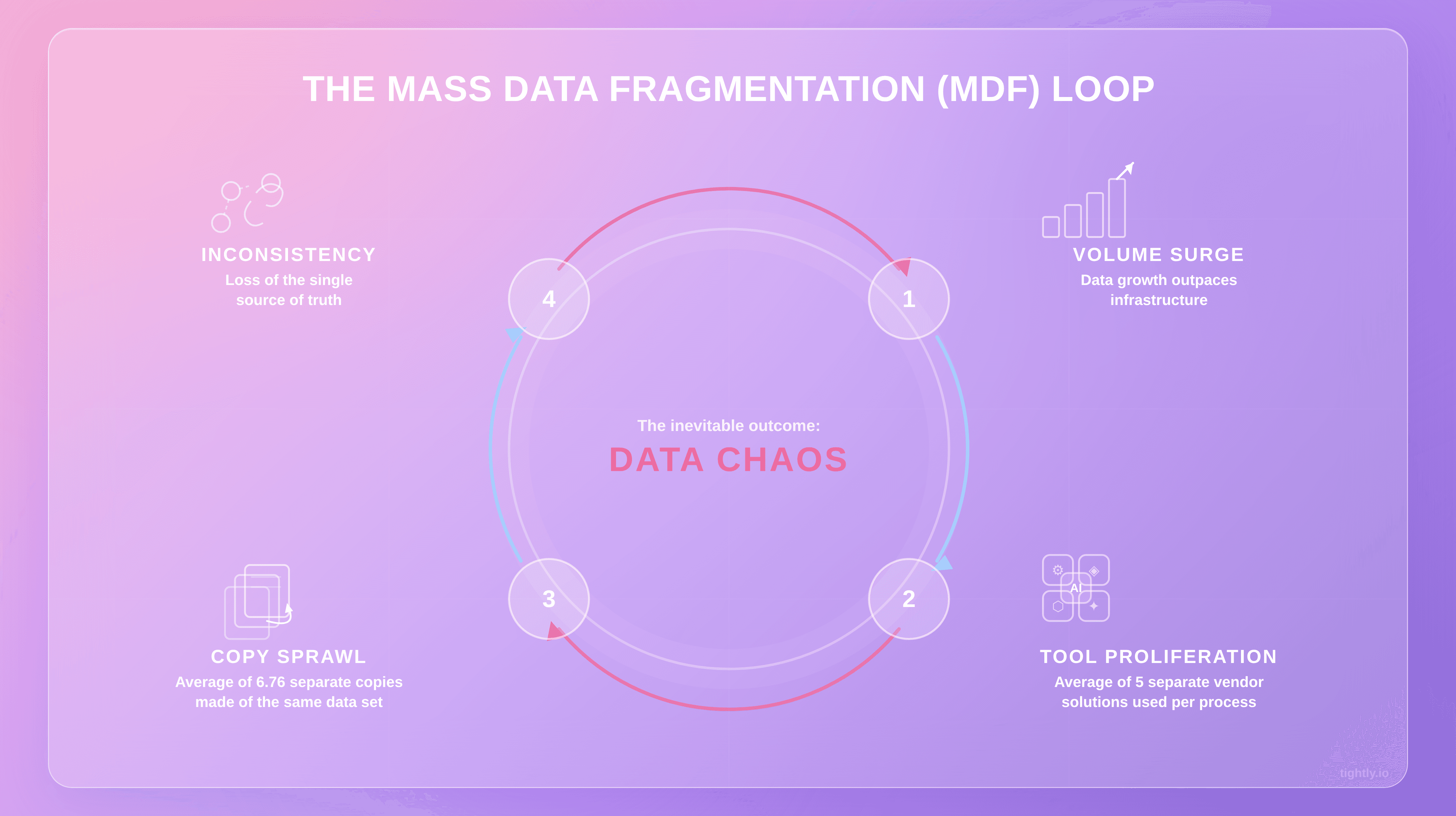
Data is fragmented, and it is breaking decision-making. The problem is only compounding as global data volumes were projected to reach 175 zettabytes by 2025, representing a five-fold increase from 2018 levels. This surge is occurring in an environment where the average enterprise manages over 1,200 SaaS applications and connects to more than 400 distinct data sources daily (World Journal of Advanced Engineering Technology and Sciences, 2025), resulting in what experts term "fractured knowledge architectures".
Ops leaders live across Excel, BI tools, and analyst email threads. "I have to go through three layers of people before I'm able to get the raw data — which then I can convert into something meaningful," an ops director explained. The pace of operations has simply outgrown the pace of reports.
A 2019 study commissioned by Cohesity identified Mass Data Fragmentation (MDF) as the primary anchor preventing high-quality decisions. The impacts are staggering:
Productivity Loss: Administrators spend 42% of their time managing fragmented data across diverse environments. These hours are being taken from strategic innovation.
Budget Waste: 67% of organizations report that MDF leads to significant budget wastage, often due to redundant storage for an average of six-plus copies of the same data set.
Human Toll: 49% of respondents feel this fragmentation saps employee satisfaction. We are burning out talent by forcing them to perform mundane manual data cleaning rather than the intelligent work they were hired for.
The Velocity Gap
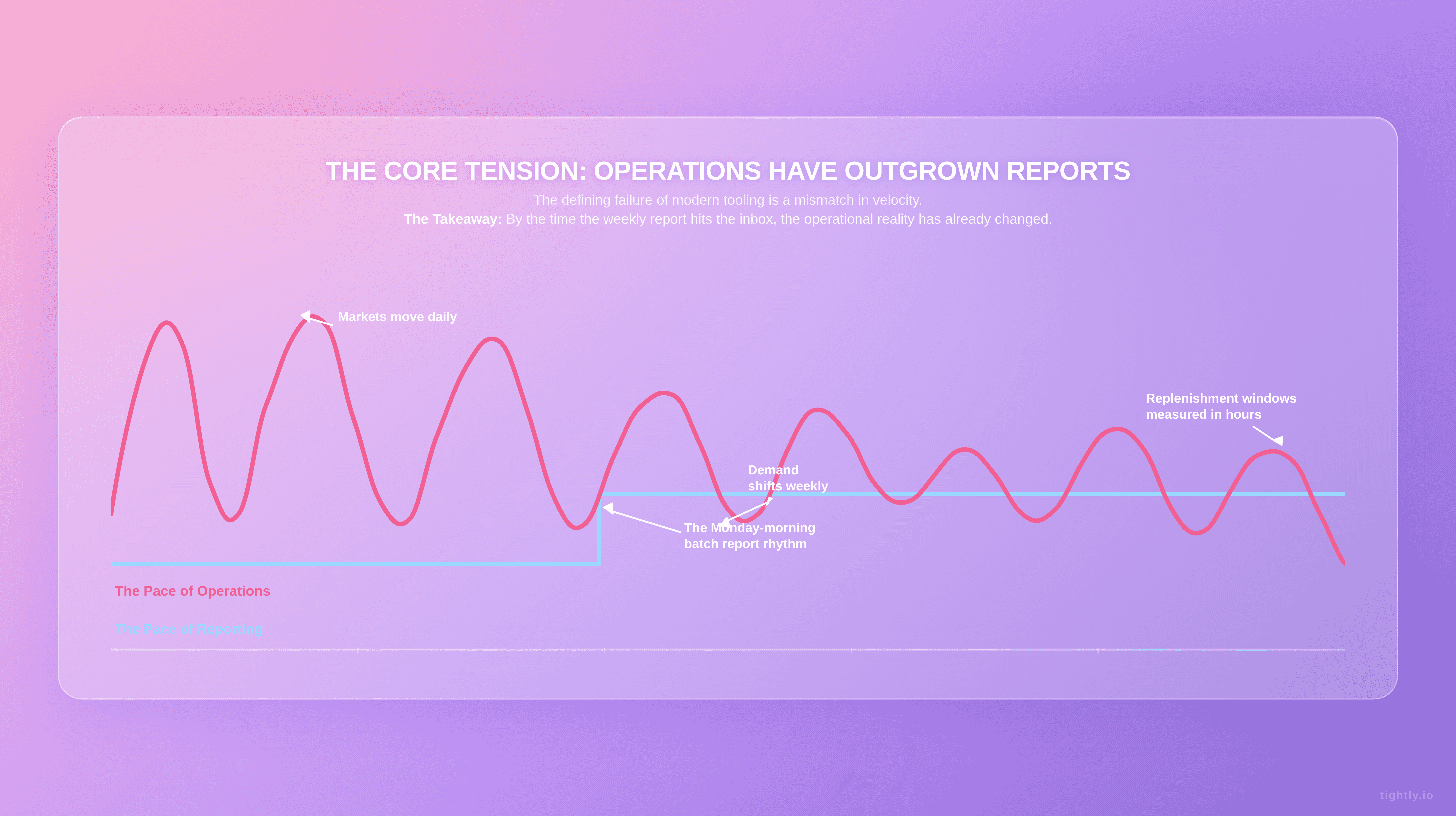
The defining failure of modern tooling is a mismatch in velocity. The modern market moves at the speed of hourly supply shocks and instant demand shifts. In contrast, the traditional "Monday morning report" is a fossil by the time it reaches the boardroom.
By the time a weekly report hits an inbox, the operational reality has already changed. While markets move daily and replenishment windows are measured in hours, many operations still rely on a batch report rhythm. Closing this "velocity gap" requires a fundamental shift in how we access the truth.
The emerging habit: Talking to your data
The paradigm shift currently underway isn't about a better tool—it’s about a better habit. We are moving away from the era of "pulling a report" and into the era of "conversing with the enterprise".
Instead of waiting for an analyst to interpret a static dashboard, ops leaders are starting to apply their domain expertise directly to the data. This is a transition from passive consumption to active reasoning. When you lower the friction of getting an answer, your focus shifts from the drudgery of reconciliation to the high-value art of decision quality.
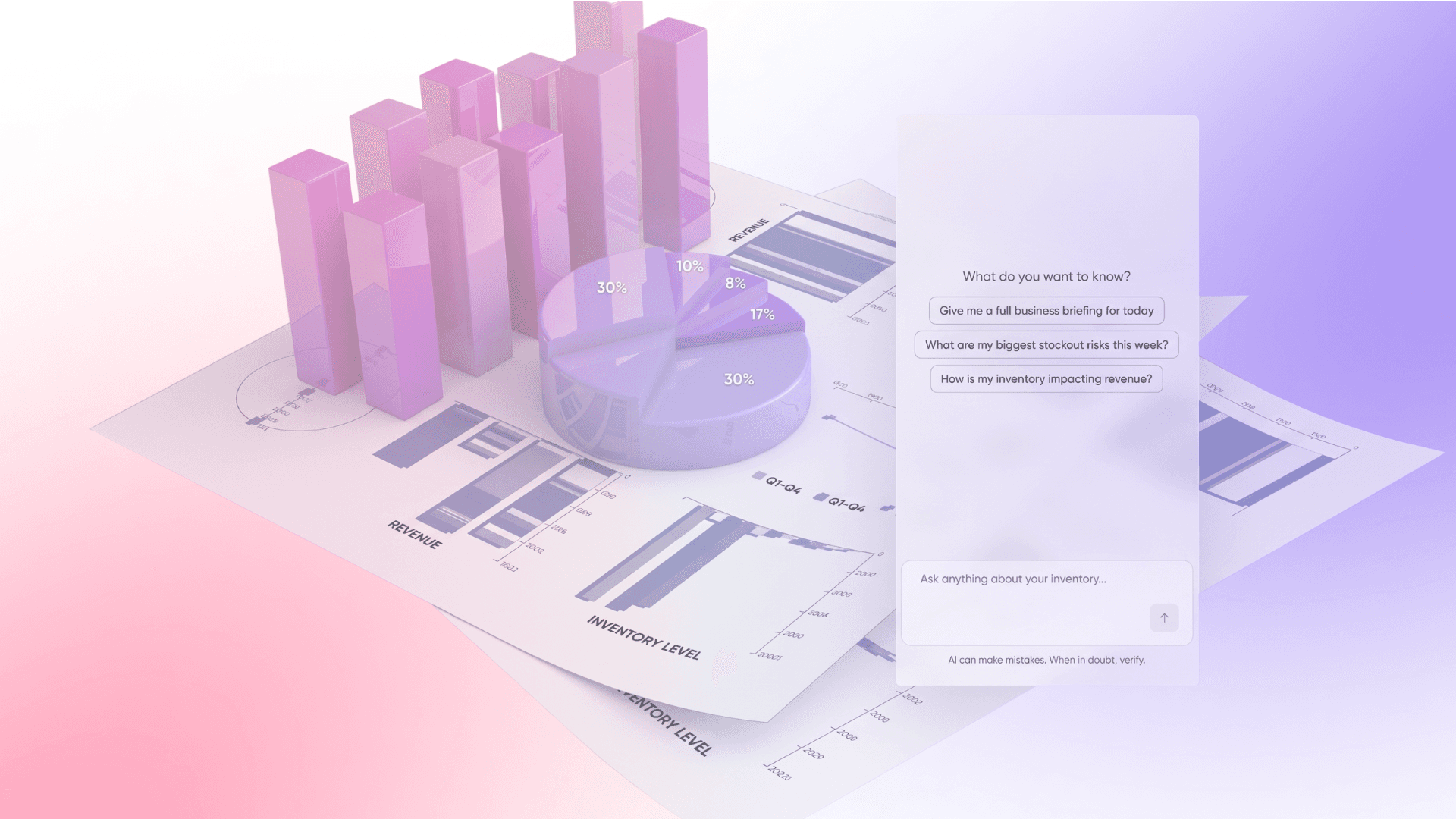
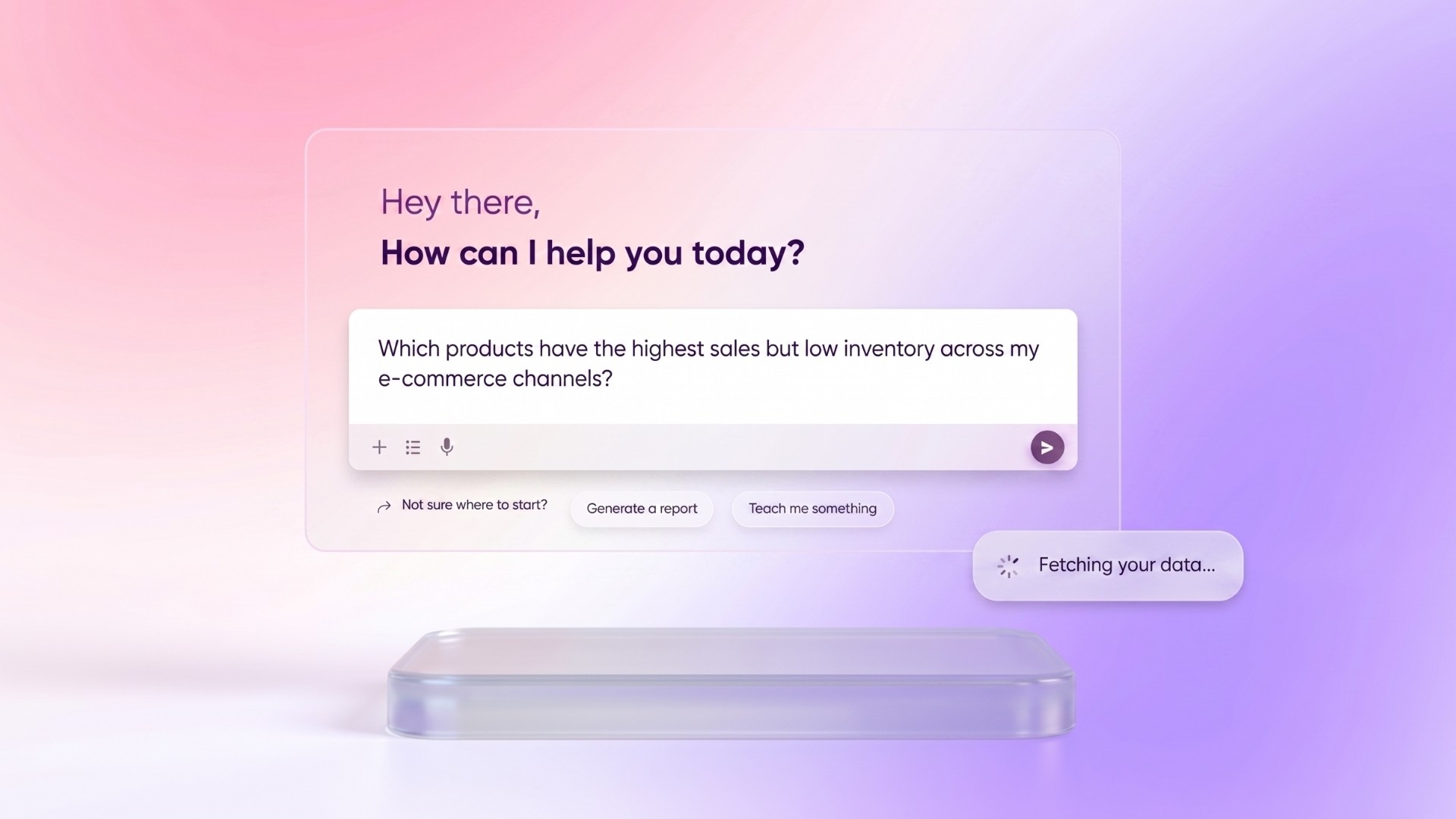
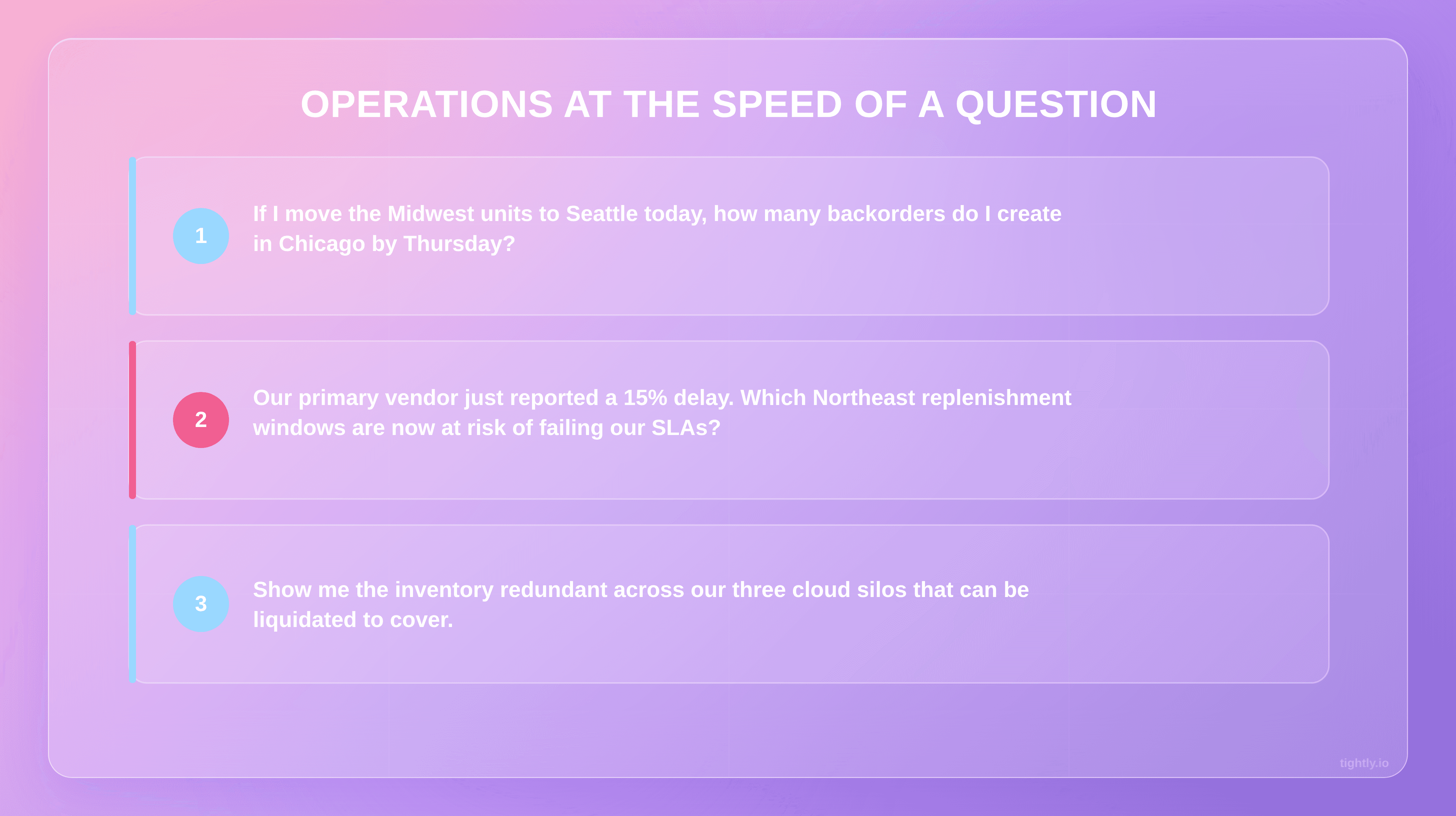
In this new habit, you don't hunt for cells in a spreadsheet; you ask questions in plain language and get action-oriented answers back in seconds:
You don't get much value when your data is locked away in a single, closed-off tool. The real impact happens when that information is open to the whole company, designed specifically so people can get to it and actually use it.
The era of the manual "analyst pull" is closing, and the rise of conversational analytics is becoming the new organizational standard. We are entering a period where the primary interface for making high-stakes inventory decisions is no longer a static dashboard of fifty charts, but a direct, intelligent dialogue with the enterprise’s collective intelligence. This evolution represents the end of the "report" as we know it.
The infrastructure required to support this natural language habit is no longer a distant promise. And by moving beyond the dashboard and addressing the root cause of fragmented data, organizations can finally reach a point where efforts and persistence are applied to high-quality decisions and decision velocity, rather than manual data cleaning. The Monday morning meeting is about to become the most productive hour of the week—and a new generation of supply chain AI is arriving to ensure it.
References
Duplessie, S. (2019). Mass data fragmentation is quietly killing digital transformation efforts [Research Insight Paper]. Enterprise Strategy Group; commissioned by Cohesity, Inc. <https://www.cohesity.com › third-party-reports>
Thankappan, A. K. P. (2025). The semantic layer: bringing order to enterprise data chaos. World Journal of Advanced Engineering Technology and Sciences, 15(1), 211-217. https://doi.org/10.30574/wjaets.2025.15.1.0194
Cagla S
Core Platform Product Lead
Share