Back
Unifying Your Supply Chain with Tightly’s Multi-Channel Architecture
Laura B
Marketing Analyst
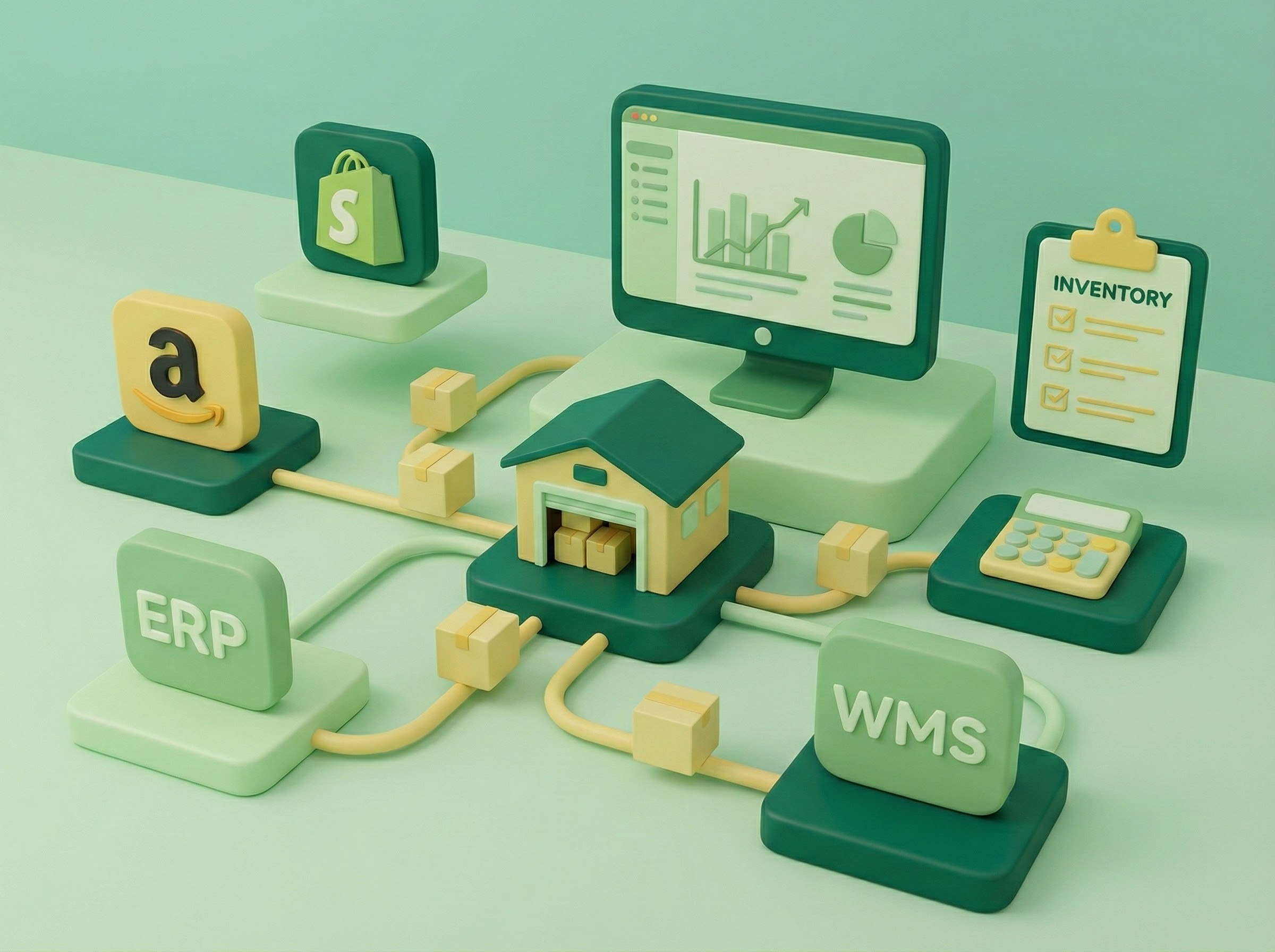
Operating a mid-market brand solely on Shopify data is a strategic blind spot that most scaling retailers eventually regret.
The Operational Risk of the "Shopify-Only" View
While Shopify is the undisputed engine of D2C branding, market data consistently places its share of US e-commerce GMV between 10% and 15%, whereas Amazon commands nearly 40% (according to Insider Intelligence); if your planning software ignores that marketplace volume, you are effectively blind to the algorithmic, volatile demand spikes that behave nothing like the steady traffic on your own site. Beyond market share, the real danger lies in the operational disconnect between B2C velocity and B2B volume—a single wholesale order to a partner can wipe out a month’s worth of D2C inventory in seconds, and if your system cannot distinguish between a “consumer sales trend" and a "bulk inventory transfer," it will inevitably mislead you into overbuying. Ultimately, Shopify is architected to track revenue, not assets, so connecting your ERP and WMS is the only way to reconcile the marketing view of what sold with the financial reality of what you actually own, where it sits, and when it must be replenished.
As you scale, your operations don't just get bigger; they get fractured. You aren't just selling on a Shopify storefront anymore. You are likely pushing volume through Amazon FBA, managing wholesale orders for B2B distributors, and perhaps even juggling physical retail stock.
Revenue goes up, but behind the scenes, you are often dealing with a disjointed reality.
The Trap
Consider a typical setup for a mid-market brand: You have an ERP (like NetSuite or SAP) handling the financials. You have a WMS tracking the physical boxes in the warehouse. You have a 3PL managing logistics in a different time zone. And finally, you have Shopify or Amazon managing the actual sales velocity.
Here is the operational problem with that setup: Your ERP knows the dollar value of your stock. Your 3PL knows the physical location. Your e-commerce platform knows the sales velocity. But do they talk to each other? Hardly.
The result is fractured inventory visibility. When your ERP says you have 100 units, but your WMS says 95 and Shopify thinks you have 110, you aren't planning; you’re guessing.
In the past, Tightly went deep on the Shopify ecosystem. It worked, but we know that for mid-market and enterprise brands, Shopify is often just one piece of a much larger, more complex puzzle.
That changes today. We are introducing Tightly’s Multi-Channel Architecture. This isn't just a shiny new integration update; it is a fundamental shift in how we handle data, linking your disparate systems to finally give you [unified supply chain visibility].
Moving Beyond the "Single Channel" Mindset
If you are running a complex retail operation, you are dealing with specific headaches that smaller merchants simply don’t understand. You need robust 3pl integration software to bridge the gap between your logistics providers and your planning teams.
Tightly’s new architecture attacks these specific pain points by hooking directly into your ERP, 3PL, WMS, and OMS. Here is the detailed breakdown of how this changes the game.
1. Guided Onboarding
Historically, connecting a massive ERP like SAP or a legacy WMS to a modern planning tool was a nightmare. It usually required "middleware"—expensive third-party connectors (like Celigo or FarApp) that cost thousands per month just to pipe data back and forth.
Tightly removes this barrier. Our new architecture detects and connects directly to your ERP, 3PL/WMS, OMS, and e-commerce platforms through a guided onboarding flow.
This means WMS Integration and 3PL Inventory Management Software capabilities are now native to the platform. We ingest the data raw and normalize it ourselves. You get the connectivity you need without the technical debt or the extra monthly bill for an integration layer.
2. Defining a True "Source of Truth" (Master Data Management)
Ask any Operations Director what keeps them up at night, and they’ll usually ask: "Which system am I supposed to trust?"
It’s a valid question. When conflicting data streams hit your desk, planning becomes a gamble. Tightly’s new update allows for true Centralized Inventory Control. We let you stop the debate by defining the "Master" source for every single data point in your specific merchant stack.
For example, you can configure Tightly to:
→ Treat NetSuite as the "Master" for inventory counts (since it acts as the financial ledger)
→ Treat Shopify and Amazon as the "Masters" for sales velocity (since they hold the real-time demand data).
By offering seamless [ERP Inventory Integration], Tightly reconciles these inputs instantly. The result is a clean, single operational view without the spreadsheet gymnastics.
3. Per-Channel Demand Forecasting
Let us be honest: an Amazon customer is not the same as a D2C customer.
Demand on Amazon might be driven by aggressive price algorithms, Prime shipping badges, and buy-box competition. Demand on your own site? That’s driven by brand loyalty, email marketing, and storytelling. If you average these two behaviors into one generic forecast, you are going to be wrong on both counts.
To fix this, Tightly now enables true Per-Channel Forecasting. You can generate a specific forecast for Amazon, a separate one for Shopify, and another for Wholesale.
Wholesale vs. Retail: This is critical for enterprise demand planning. Wholesale orders are often bulk, infrequent, and pre-booked. Retail orders are frequent and small. Tightly separates these streams so a massive B2B order doesn't artificially spike your D2C forecast.
Marketplace Specifics: It effectively solves the complexity of Marketplace Inventory Management by allowing you to apply different forecasting models (like seasonality curves) to each platform independently.
4. Per-Warehouse Replenishment (The "Where" vs. "What")
Knowing what to buy is only half the battle. Knowing where to put it is the rest of the war.
Imagine you are managing stock across a US distribution center and a UK fulfillment hub. A global forecast is useless here. You need to know that the UK warehouse needs 500 units of the Winter Coat by October to meet local demand, while the US warehouse is still trying to clear through summer inventory.
Our update acts as a sophisticated inventory optimization software layer. It enables per-warehouse replenishment planning, ensuring stock is physically located where the demand actually is.
Global Visibility: While we plan at the local level (per warehouse), we maintain a global dashboard. This prevents "blind spots" where you reorder stock for the US while the UK is sitting on a surplus of that exact item.
Transfer Logic: This granular visibility prevents the costly nightmare of cross-shipping inventory across the Atlantic just to fill an order.
5. Seamless Workflow Integration
Finally, we understand that you cannot just stop operations to install new software in enterprise teams.
Tightly integrates with your existing supplier and replenishment flows (Purchase Orders, Transfer Orders, etc.) without forcing you to change how you physically move goods.
If your team currently raises POs in NetSuite, Tightly can push the plan into NetSuite as a draft PO.
If you use a WMS to receive goods, Tightly listens for that receipt to update your planning figures automatically.
At a Glance: The Multi-Channel Evolution
To visualize the shift, here is how the new architecture stacks up against the old way of doing things:
Feature | Legacy Approach | Tightly Multi-Channel Architecture |
Data Visibility | Siloed. Planning happens in Shopify, but inventory is trapped in the ERP. | Unified. [unified supply chain visibility] connects ERP, WMS, and Sales Channels into one view. |
Forecasting Logic | Global. All sales get lumped into one big "demand" bucket. | Channel-Specific. Amazon, Wholesale, and D2C are treated as unique businesses with unique forecasts. |
Replenishment | Aggregate. "We need 1,000 units total." | Location-Specific. "We need 600 units in New Jersey and 400 in Manchester." |
Integration | Often requires expensive, clunky middleware. | Direct. Guided onboarding flow connects directly to your stack without extra costs. |
The Bottom Line
Your customers see one brand. Your planning team should see one supply chain.
If you are managing complex operations you simply cannot afford to plan in silos anymore. It’s too expensive, and it’s too risky. It is time to experience the power of true multi-channel visibility.
See Tightly’s Multi-Channel Architecture in Action – Book a Demo
FAQs
As we roll this out to our partners, we’ve heard a few common questions pop up regarding implementation.
Does this replace my ERP?
No, definitely not. Tightly isn't an ERP; we make your ERP actionable. Systems like NetSuite, Microsoft Dynamics, or SAP are incredible at accounting and being a ledger of record. But let's face it: they are often rigid and static when it comes to the nuances of demand planning. Tightly pulls the data out of those systems, applies advanced forecasting logic, and then pushes actionable purchasing plans back into your workflow.
Do I need to change my current 3PL or WMS?
Not at all. The real strength of this architecture is flexibility. Whether you use a massive global 3PL network or a proprietary WMS, Tightly ingests that inventory data to inform your replenishment plans. We integrate with your existing supplier flows—Purchase Orders, Transfer Orders—without forcing you to change how you physically move goods.
Laura B
Marketing Analyst
Share